
Cyber Attacks
Difference Between ARP Spoofing and ARP Poisoning Explained
These terms describe the same attack mechanism where an attacker corrupts local address tables to intercept or block network traffic without leaving the subnet.
These terms describe the same attack mechanism where an attacker corrupts local address tables to intercept or block network traffic without leaving the subnet.

Training stops the human error that bypasses technical controls, turning staff into active defenders against social engineering.

Static perimeter defenses fail against cloud-native architectures because the attack surface shifts with every container deployment and microservice interaction.
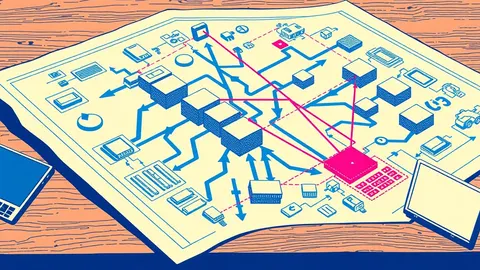
Threat modeling exposes hidden attack surfaces by mapping data flow and trust boundaries, revealing vulnerabilities that static code analysis and automated scanners consistently miss.

You inherit every vulnerability in the libraries you import, turning your code into a collection of third-party liabilities you cannot directly control.

Formjacking bypasses server-side security by intercepting data in the browser, making client-side integrity checks the only effective defense against this stealthy attack.

Most access failures stem from permission drift, where roles accumulate privileges that are no longer needed for the assigned job function.

Card theft rarely involves physical skimming anymore; most losses stem from data aggregation within insecure application layers and third-party vendor networks.

SIM swapping leaves distinct digital footprints in authentication logs, revealing carrier changes and concurrent session anomalies that standard monitoring often misses.

Most enumeration defenses fail because they rely on hiding services, which attackers bypass by observing protocol behavior rather than port states.

Golden ticket attacks exploit the trust model of directory services, allowing attackers to generate valid credentials that standard log monitoring often misses entirely.

File integrity monitoring detects unauthorized changes by comparing cryptographic hashes, revealing modifications that traditional antivirus software often misses entirely.

Default Windows logging misses stealthy fileless attacks and credential dumping, requiring custom channel configuration to catch modern threats.

Proper segmentation forces attackers to breach multiple independent control planes, turning a single compromise into a contained incident rather than a total collapse.

Small teams face disproportionate risk during cloud migration because default configurations often expose data before security policies are finalized.

Email encryption protects the message content in transit and at rest, but it leaves the metadata visible to network observers and service providers.

Race conditions exploit the invisible gaps between checking a state and changing it, allowing attackers to rewrite data before the system can lock it.

Output encoding neutralizes injection risks at the render layer but fails to address logic flaws or data integrity issues, making it a necessary but insufficient defense.

AS-REP roasting targets accounts with Kerberos pre-authentication disabled, not weak passwords, and yields offline hashes that never touch the domain controller.

Treating all threats as malware misses the specific data encryption mechanisms of ransomware, leaving your backups vulnerable to targeted deletion.

Network policies act as stateful firewalls for pods, meaning that blocking inbound traffic automatically blocks the return data for any established connection.

Fuzzing excels at breaking parsers but fails to find logic errors, creating a false sense of security if used as the sole validation method.

Information Sharing and Analysis Centers transform isolated security alerts into collective defense by standardizing how sectors exchange raw threat data without legal exposure.

These rules enforce process-level blocking policies that stop known exploit techniques before they execute, shifting defense from signature scanning to behavioral control.