Threat Modeling Cybersecurity: How to Map Attack Paths Before Code
Threat modeling exposes hidden attack surfaces by mapping data flow and trust boundaries, revealing vulnerabilities that static code analysis and automated scanners consistently miss.
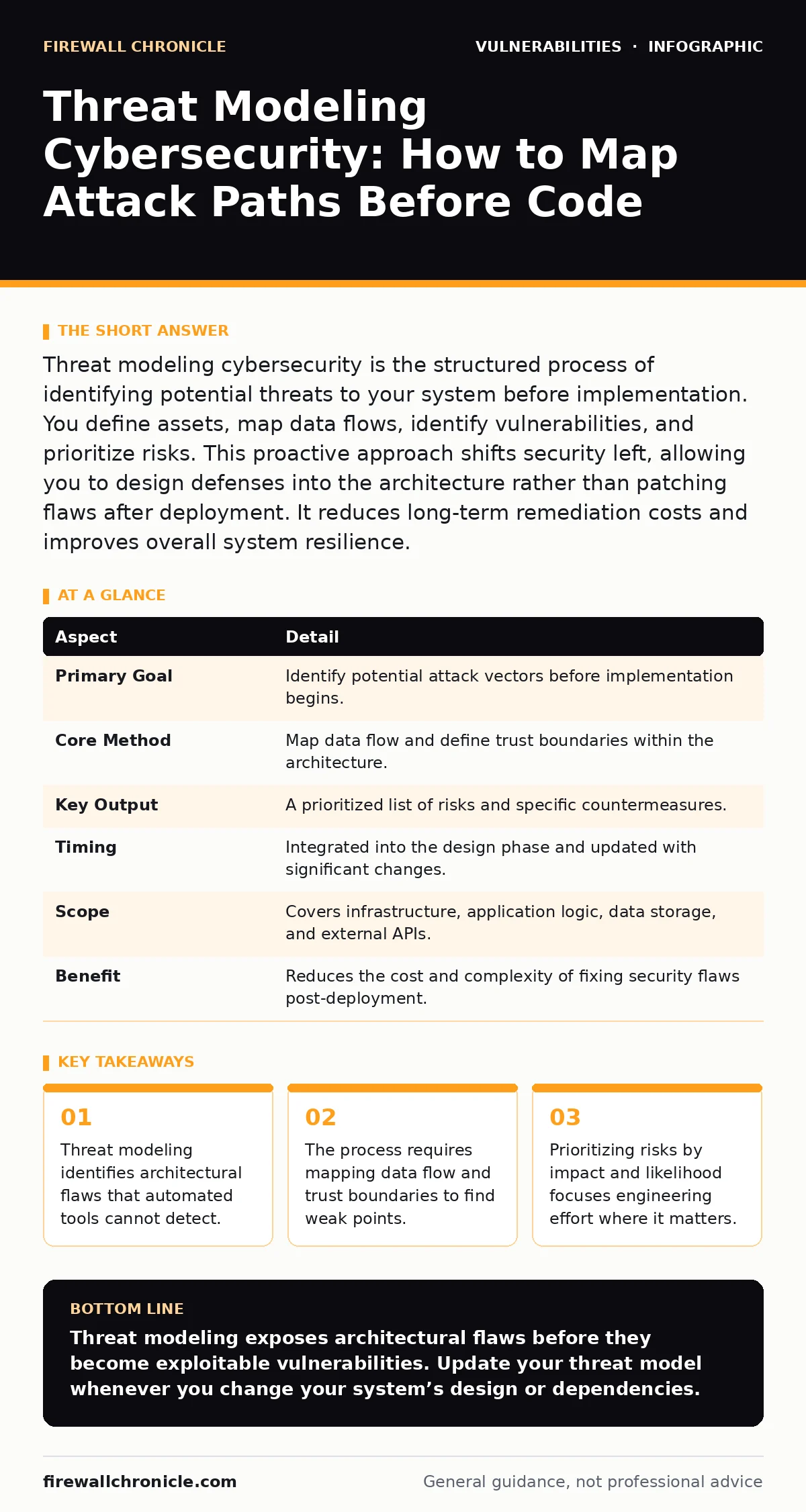
Threat modeling cybersecurity is the structured process of identifying potential threats to your system before implementation. You define assets, map data flows, identify vulnerabilities, and prioritize risks. This proactive approach shifts security left, allowing you to design defenses into the architecture rather than patching flaws after deployment. It reduces long-term remediation costs and improves overall system resilience.
What is threat modeling cybersecurity?
Threat modeling cybersecurity is the practice of anticipating how an attacker might exploit your system’s design. It is not a single tool or a one-time audit. It is a structured methodology that forces you to view your architecture through the lens of an adversary. You identify what you are protecting, how data moves, and where trust boundaries exist. This visibility reveals weaknesses that hidden in plain sight within complex integrations.
Developers often focus on code quality and functionality. Security teams often focus on perimeter defenses. Threat modeling bridges this gap by examining the interactions between components. You determine which components are trustworthy and which are hostile. You define what happens when a component fails or behaves unexpectedly. This analysis prevents costly redesigns later in the development lifecycle.
| Aspect | Detail |
|---|---|
| Primary Goal | Identify potential attack vectors before implementation begins. |
| Core Method | Map data flow and define trust boundaries within the architecture. |
| Key Output | A prioritized list of risks and specific countermeasures. |
| Timing | Integrated into the design phase and updated with significant changes. |
| Scope | Covers infrastructure, application logic, data storage, and external APIs. |
| Benefit | Reduces the cost and complexity of fixing security flaws post-deployment. |
How threat modeling works in practice
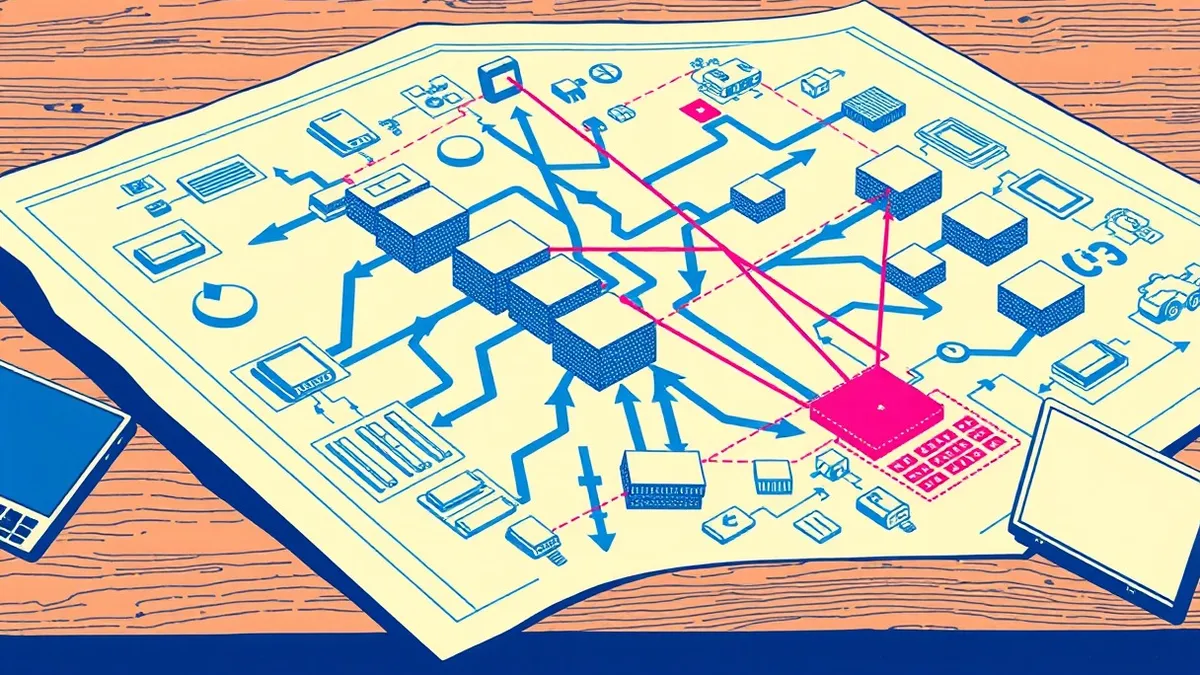
The process begins with a clear definition of scope. You must decide which part of the system you are analyzing. A broad scope leads to vague results. A narrow scope might miss critical interactions. Start with a high-level diagram of your architecture. Include all external inputs, internal processing logic, and data storage locations. Label each component with its security requirements.
Next, you identify the assets you need to protect. These are typically user data, intellectual property, or system availability. You then map the data flow. Draw arrows showing how information moves between components. Label each arrow with the protocol and encryption status. This map reveals where data is exposed. It also highlights where trust is assumed rather than verified.
You analyze each component and connection for potential threats. Ask what could go wrong. Consider unauthorized access, data modification, or denial of service. Use a framework like STRIDE to ensure coverage. STRIDE stands for Spoofing, Tampering, Repudiation, Information Disclosure, Denial of Service, and Elevation of Privilege. This checklist ensures you do not overlook common attack patterns.
Who threat modeling affects
Threat modeling affects every team member involved in building and maintaining the system. Software engineers benefit from clear security requirements early in the design phase. They can write code that aligns with the intended security posture. Architects gain a deeper understanding of their system’s dependencies. They can make informed decisions about third-party services and infrastructure choices.
Security teams shift from reactive auditing to proactive collaboration. They provide guidance on specific architectural decisions rather than reviewing finished code. Product managers understand the trade-offs between features and security. They can prioritize development work that includes necessary security controls. This shared responsibility creates a culture where security is a feature, not an afterthought.
What to do about identified threats
Once you have identified potential threats, you must prioritize them. Not all threats are equally likely or impactful. Use a risk scoring system to evaluate each threat. Consider the likelihood of occurrence and the potential business impact. High-risk threats require immediate attention. Low-risk threats might be accepted or mitigated with standard controls.
Develop specific countermeasures for high-risk threats. These should be architectural changes, not just code fixes. For example, if a threat involves unauthorized data access, implement strict access controls at the database level. If a threat involves data tampering, use cryptographic signatures to verify integrity. Document these decisions. This documentation serves as a reference for future development and audits.
Common mistakes in threat modeling
Many organizations treat threat modeling as a compliance checkbox. They create a diagram once and file it away. This approach fails because systems evolve. New features introduce new attack surfaces. Dependencies change. Threats shift. A static model becomes obsolete quickly. You must update your threat model whenever you make significant architectural changes.
Another common mistake is focusing only on external threats. Internal threats and insider risk are often overlooked. You must consider what happens when a trusted component is compromised. What if a developer has access to production data? What if a third-party API fails or returns malicious data? Trust boundaries must be defined internally as well as externally.
See also: CVSS Scores: Why High Numbers Mislead Your Risk Assessment
Integrating threat modeling with other practices
Threat modeling complements other security practices. It provides the context for fuzz testing. When you know where the critical inputs are, you can target your fuzzing efforts more effectively. It informs your approach to output encoding. By understanding where data is rendered, you can apply the correct encoding techniques to prevent injection attacks.
It also helps you prioritize patches for zero-day vulnerabilities. If a component is critical to your data flow, a vulnerability in that component is higher risk. You can use CVSS score calculations to quantify the severity of known vulnerabilities. This allows you to allocate resources efficiently. Threat modeling does not replace these practices; it enhances them by providing architectural context.
Handling complex dependencies
Modern systems rely on many external services. This complexity makes threat modeling challenging. You cannot control the security of third-party APIs. You must assume they can fail or be compromised. Implement timeouts, retries, and circuit breakers. Validate all data received from external sources. Do not trust data just because it comes from a known provider.
Maintaining the threat model
Threat modeling is not a one-time event. It is a continuous process. As your system grows, so do the attack vectors. Regular reviews ensure your model remains accurate. Schedule periodic threat modeling sessions. Trigger reviews when you add new features, change infrastructure, or integrate new services.
Document your assumptions. Record why you chose certain controls. This documentation helps new team members understand the security design. It also provides evidence for audits and compliance requirements. A well-maintained threat model is a living document that guides secure development. It evolves with your system.
Key takeaways
- Threat modeling identifies architectural flaws that automated tools cannot detect.
- The process requires mapping data flow and trust boundaries to find weak points.
- Prioritizing risks by impact and likelihood focuses engineering effort where it matters.
- Regular updates keep the model aligned with changing system complexity and dependencies.
Threat modeling exposes architectural flaws before they become exploitable vulnerabilities. Update your threat model whenever you change your system’s design or dependencies.
Frequently asked questions
How often should I perform threat modeling?
Perform threat modeling during the initial design phase. Update the model whenever you make significant architectural changes, add new features, or integrate third-party services. Regular reviews every few months help keep the model current.
Do I need a security expert to do threat modeling?
You do not need a dedicated security expert to start. Developers and architects can perform basic threat modeling using standard frameworks like STRIDE. However, involving security specialists helps identify subtle flaws and ensures best practices are followed.
What is the difference between threat modeling and risk assessment?
Threat modeling focuses on identifying potential attack vectors and architectural weaknesses. Risk assessment evaluates the likelihood and impact of those threats. Threat modeling is a subset of risk assessment that specifically addresses security threats.
Can threat modeling prevent all security breaches?
No threat modeling can prevent all breaches. It reduces the likelihood of certain attacks by identifying and mitigating architectural flaws. However, new vulnerabilities emerge, and attackers adapt. Threat modeling is one layer of defense in a broader security strategy.
How this guide was produced: written by the Firewall Chronicle editorial team with AI assistance, checked against the public references listed below, and reviewed when the facts change. See our editorial policy or report an error.