Printed Document Leaks: How to Secure Physical Data
Paper records often bypass digital security controls, creating a blind spot that attackers exploit through social engineering and physical access.
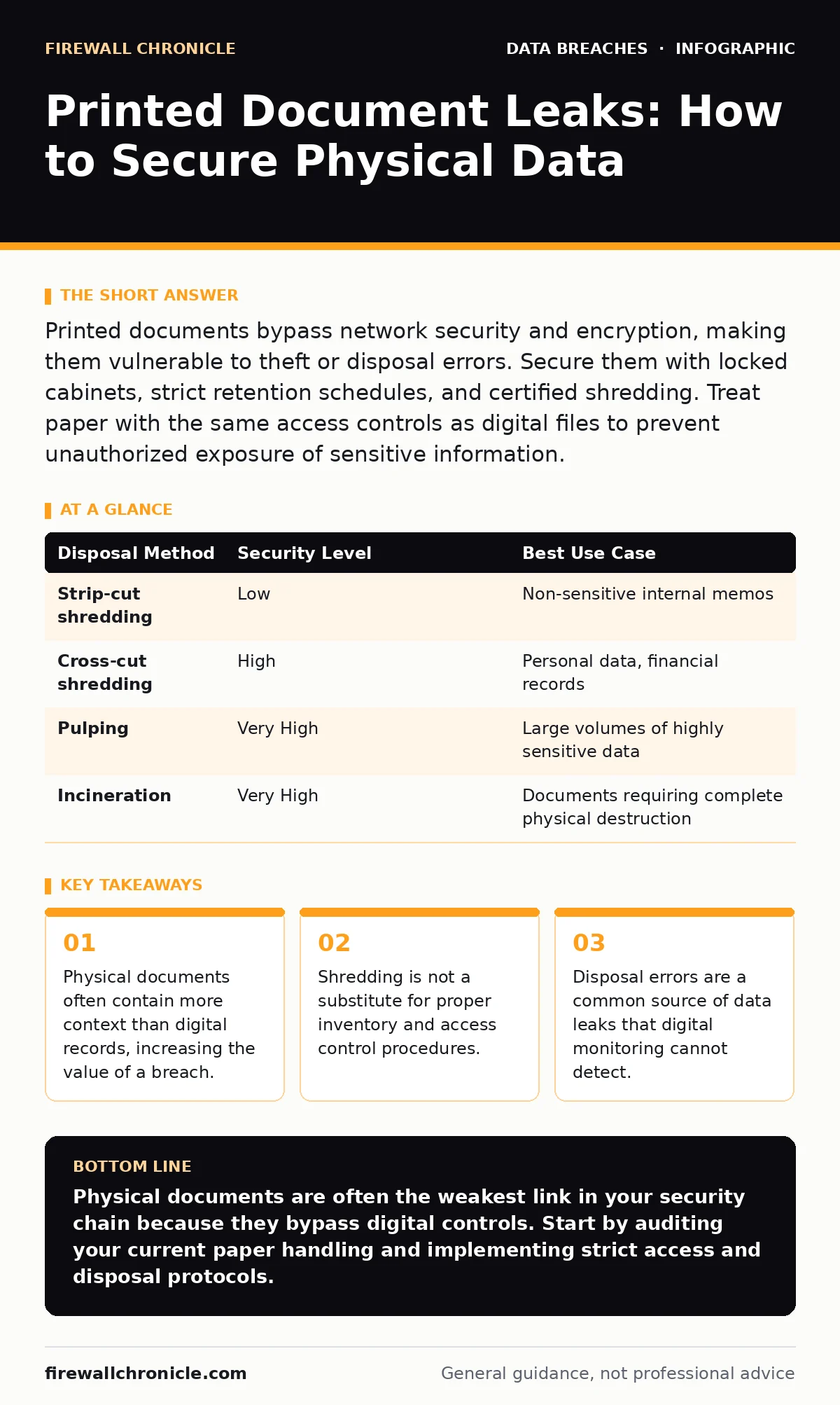
Printed documents bypass network security and encryption, making them vulnerable to theft or disposal errors. Secure them with locked cabinets, strict retention schedules, and certified shredding. Treat paper with the same access controls as digital files to prevent unauthorized exposure of sensitive information.
Why are printed documents a security risk?
Printed documents bypass the digital security controls that protect your network and endpoints. When data moves from a screen to paper, it loses the protection of encryption, access logs, and firewalls. A printed page can be left on a desk, thrown in a recycling bin, or stolen from a mailroom. This physical exposure creates a vector for attackers who cannot breach your software but can walk through your door.
What is the most common cause of paper leaks?
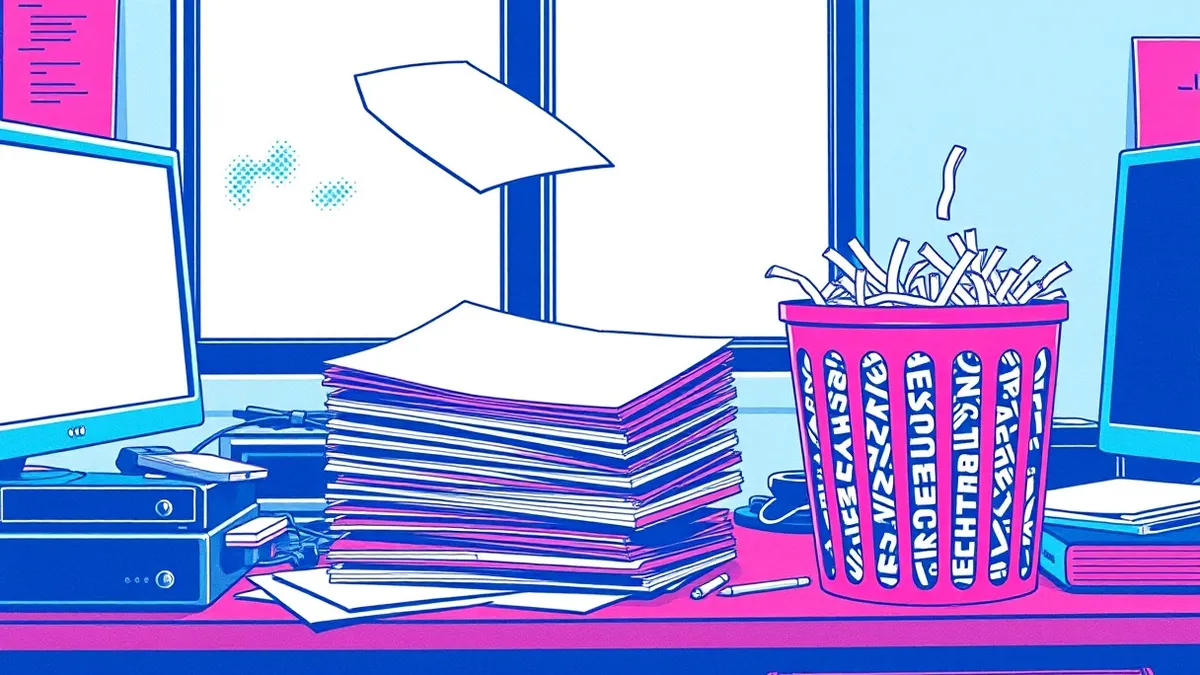
Improper disposal is the primary cause of printed document leaks. Employees often treat sensitive paper as general waste, placing it in open bins or recycling containers. This assumes that the waste management chain is secure, which is rarely the case. Attackers practice dumpster diving to retrieve discarded records that contain personal or financial data. This low-tech method remains effective because it requires no technical skill, only physical access.
How do you control access to physical files?
You must apply role-based access control principles to physical spaces. Just as digital systems restrict file access to specific users, physical rooms and cabinets should require keys, badges, or biometric verification. Not every employee needs access to every file. Restricting access reduces the surface area for internal theft or accidental exposure. If a file is not needed for daily work, it should be locked away, not left on a shared desk.
Is shredding enough to protect data?
Shredding destroys the physical medium, but it does not address the risk of unauthorized access before disposal. A document can be read, photographed, or stolen before it reaches the shredder. Furthermore, cross-cut shredding is required for sensitive data; strip-cut shredding can be reassembled. You must also verify that your waste vendor follows secure disposal protocols. Relying solely on the act of shredding ignores the handling chain between printing and destruction.
| Disposal Method | Security Level | Best Use Case |
|---|---|---|
| Strip-cut shredding | Low | Non-sensitive internal memos |
| Cross-cut shredding | High | Personal data, financial records |
| Pulping | Very High | Large volumes of highly sensitive data |
| Incineration | Very High | Documents requiring complete physical destruction |
How do you track physical documents?
You need an inventory system that logs who holds which document and for how long. This mirrors file integrity monitoring in digital systems, where changes to files are recorded. For paper, this means checking out documents from a secure archive and recording the return. If a document is missing, you know when and where the last authorized access occurred. This audit trail is vital for identifying whether a leak was internal theft or external intrusion.
See also: Encrypting Data at Rest for Small Teams: Practical Steps · Data Encryption in Transit: Protecting Moving Information
What is the role of retention policies?
A retention policy defines how long you keep a document and when it must be destroyed. Keeping records longer than necessary increases the risk of exposure without adding business value. Many organizations hoard paper "just in case," creating large repositories of unsecured data. Define clear dates for destruction and automate the reminder process. This reduces the total volume of sensitive material that could be compromised.
How does this relate to digital security?
Physical and digital security must operate as a single system. A breach in one area often exposes weaknesses in the other. For example, an attacker who steals a password list from a printer tray can use it to bypass email encryption or other digital controls. Conversely, a digital breach might lead to the printing of sensitive data that is then mishandled. You must align your policies so that the security posture of paper matches that of your network.
What are the legal implications of paper leaks?
Laws regarding data protection apply to physical records just as they do to digital ones. If you fail to secure printed documents containing personal data, you may face fines or legal action. The law does not distinguish between a hacked database and a stolen filing cabinet; it focuses on the failure to protect data. Ignorance of the physical medium is not a valid defense in regulatory investigations.
How do you train staff on paper security?
Training must emphasize that paper is a data endpoint, not just office supplies. Employees often view printing as a final step, removing data from the "danger zone" of cyber threats. You must teach them that the threat shifts from digital hacking to physical theft. Include scenarios in your training where a misplaced document leads to identity theft or payment card theft. Make the consequences concrete so that employees understand the gravity of leaving sensitive paper unattended.
What is the first step to securing printed data?
Conduct a physical audit of your sensitive documents. Identify where they are stored, who accesses them, and how they are disposed of. Look for open bins, unlocked cabinets, and cluttered desks. This baseline assessment reveals the gaps in your current process. Once you know where the vulnerabilities are, you can implement controls like locked storage and strict disposal procedures. This physical inventory is the foundation of a secure document lifecycle.
Key takeaways
- Physical documents often contain more context than digital records, increasing the value of a breach.
- Shredding is not a substitute for proper inventory and access control procedures.
- Disposal errors are a common source of data leaks that digital monitoring cannot detect.
Physical documents are often the weakest link in your security chain because they bypass digital controls. Start by auditing your current paper handling and implementing strict access and disposal protocols.
Frequently asked questions
How do I prevent printers from leaking data?
Enable secure print features that require a PIN or badge swipe at the device before printing. This ensures documents are not left unattended in the output tray, reducing the risk of unauthorized viewing or theft.
Can I use cloud storage to reduce paper risk?
Yes, digitizing records reduces the physical attack surface. However, you must ensure the cloud storage is encrypted and access-controlled. Digitization shifts the risk from physical theft to cyber threats, so you must maintain strong digital security measures.
What should I do if I find a lost document?
Treat it as a potential breach. Report it immediately to your security team so they can assess the sensitivity of the data. Determine if the document was exposed to unauthorized individuals and take steps to mitigate any potential harm, such as notifying affected parties.
How often should I review my physical security?
Review your physical security controls at least annually or whenever there is a change in office layout or personnel. Regular reviews ensure that new vulnerabilities, such as unlocked cabinets or changed disposal vendors, are identified and addressed promptly.
How this guide was produced: written by the Firewall Chronicle editorial team with AI assistance, checked against the public references listed below, and reviewed when the facts change. See our editorial policy or report an error.