Incident Communication Plans: 9 FAQs on Strategy and Execution
An incident communication plan dictates who speaks, when they speak, and what they omit, turning technical chaos into controlled narrative management.
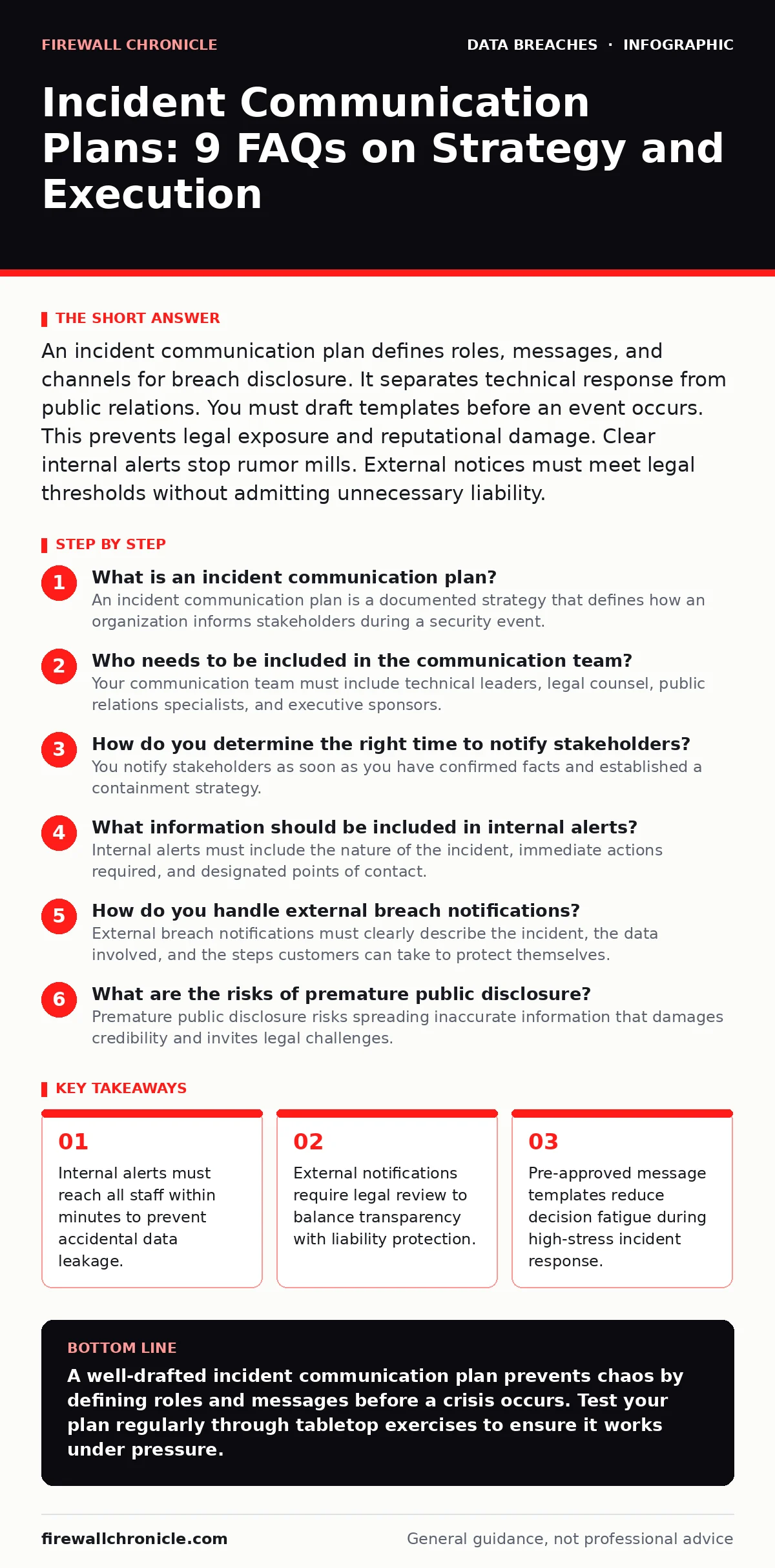
An incident communication plan defines roles, messages, and channels for breach disclosure. It separates technical response from public relations. You must draft templates before an event occurs. This prevents legal exposure and reputational damage. Clear internal alerts stop rumor mills. External notices must meet legal thresholds without admitting unnecessary liability.
What is an incident communication plan?
An incident communication plan is a documented strategy that defines how an organization informs stakeholders during a security event. It specifies who holds authority to speak, which channels to use, and the timing of disclosures. This plan operates alongside technical response procedures but focuses entirely on information flow. It ensures consistent messaging across legal, technical, and executive teams. Without this document, staff may provide conflicting statements to media or customers. The plan acts as a script for crisis management, reducing ambiguity when seconds count.
Who needs to be included in the communication team?
Your communication team must include technical leaders, legal counsel, public relations specialists, and executive sponsors. Technical leaders provide accurate details about the scope and nature of the breach. Legal counsel ensures that statements comply with regulatory requirements and do not admit unnecessary liability. Public relations specialists craft messages that maintain trust without over-promising fixes. Executive sponsors authorize major decisions and allocate resources. Including these 4 roles ensures that every perspective is considered before any message goes out.
How do you determine the right time to notify stakeholders?
You notify stakeholders as soon as you have confirmed facts and established a containment strategy. Waiting too long erodes trust and may violate legal deadlines for breach notification. Speaking too early risks providing incorrect information that must later be retracted. The optimal moment is when you can state what happened, what data was affected, and what you are doing to fix it. This balance requires real-time coordination between technical responders and legal advisors. Delaying notification until the entire incident is resolved often creates a larger reputational crisis than the initial breach.
What information should be included in internal alerts?
Internal alerts must include the nature of the incident, immediate actions required, and designated points of contact. Staff need to know if they should shut down systems, preserve evidence, or continue normal operations. Clear instructions prevent well-meaning employees from accidentally deleting logs or spreading misinformation. The alert should specify who is authorized to speak to external parties. This containment of information flow stops rumors from circulating internally. Imagine a scenario where a developer receives an email from an unknown sender claiming a breach; a clear internal protocol tells them exactly who to verify with.
How do you handle external breach notifications?
External breach notifications must clearly describe the incident, the data involved, and the steps customers can take to protect themselves. These letters should avoid technical jargon that confuses non-technical readers. You must reference the relevant legal requirements for disclosure without listing them explicitly. The tone should be empathetic but factual, acknowledging the concern without admitting negligence unless proven in court. Review your customer breach notification letters against legal templates to ensure compliance. Providing actionable advice, such as changing passwords or monitoring credit reports, demonstrates responsibility and reduces customer anxiety.
See also: Log Management and Analysis: Turning Noise into Signal · Blue Team Operations: How Detection and Response Actually Works
What are the risks of premature public disclosure?
Premature public disclosure risks spreading inaccurate information that damages credibility and invites legal challenges. If you announce a breach before confirming the scope, you may understate or overstate the impact. This forces costly corrections and erodes stakeholder trust. Media outlets often amplify initial statements, making retraction difficult. Premature disclosure can also alert attackers to your detection methods, allowing them to adapt their tactics. You must verify the extent of data exposure before making any public statement. This verification process often takes hours or days, requiring disciplined silence from all staff.
How do you manage ongoing communication during a long incident?
You manage ongoing communication by establishing a regular update schedule and a single source of truth. Stakeholders expect consistent information, even if there is no new progress to report. Silence creates anxiety and speculation. Weekly updates or a dedicated status page provide transparency without overwhelming responders with inquiries. This approach keeps external pressure manageable while the technical team works on remediation. It also allows you to adjust messaging as new facts emerge. Consistent communication prevents the narrative from being driven by external rumors or competitor attacks.
| Stakeholder Group | Primary Concern | Communication Channel | Update Frequency |
|---|---|---|---|
| Employees | Operational impact | Internal email or chat | Immediate, then daily |
| Customers | Data safety | Email or website notice | Initial notice, then weekly |
| Regulators | Compliance | Formal legal submission | As required by law |
| Media | Story details | Press release or hotline | Only when significant progress occurs |
What is the role of legal review in communication?
Legal review ensures that all communications protect the organization from liability while meeting disclosure obligations. Lawyers check for admissions of guilt, unnecessary technical details that could aid attackers, and compliance with privacy laws. This review adds time to the process but prevents costly lawsuits and regulatory fines. You must balance speed with accuracy, as delays can also carry legal penalties. Legal counsel helps define the boundaries of what can be said publicly versus what must remain confidential for investigation purposes. This boundary is critical in maintaining the integrity of the forensic analysis.
How do you measure the effectiveness of your communication plan?
You measure effectiveness by tracking stakeholder sentiment, media coverage, and internal compliance with protocols. Post-incident reviews should analyze whether messages were clear, timely, and consistent. Feedback from customers and employees reveals gaps in understanding or trust. Metrics include the volume of inbound inquiries, the sentiment of social media mentions, and the speed of internal alert distribution. This data informs improvements for future plans. Regular testing through tabletop exercises helps identify weaknesses before a real incident occurs. These exercises simulate pressure and reveal communication bottlenecks.
What happens if the plan fails during an actual incident?
If the plan fails, the organization faces fragmented messaging, legal exposure, and reputational damage. Staff may speak to media without authorization, creating conflicting narratives. Customers may receive incomplete or inaccurate information, leading to loss of trust. The technical team may be distracted by communication demands, slowing remediation efforts. A failed plan often results in a reactive rather than proactive stance. This loss of control makes it difficult to manage the incident's aftermath. You must treat communication failures as seriously as technical failures in your post-incident review.
Key takeaways
- Internal alerts must reach all staff within minutes to prevent accidental data leakage.
- External notifications require legal review to balance transparency with liability protection.
- Pre-approved message templates reduce decision fatigue during high-stress incident response.
A well-drafted incident communication plan prevents chaos by defining roles and messages before a crisis occurs. Test your plan regularly through tabletop exercises to ensure it works under pressure.
Frequently asked questions
How long should I keep incident communication records?
Retain all communication records for the duration required by your log retention policies and legal statutes. This often extends beyond the immediate incident resolution for potential litigation or regulatory audits.
Can I use automated tools for breach notifications?
Automated tools can distribute messages but must be configured with legally reviewed content. Ensure the tool allows for manual override and verification before sending to avoid mass errors.
Should I mention encryption at rest in breach notifications?
Mentioning encryption at rest is appropriate if it mitigates the risk to the data. Explain that the data was unreadable without keys, reducing the likelihood of misuse. This context helps stakeholders assess their personal risk accurately.
How do I handle vendor risk management in communications?
If a vendor is involved, coordinate with their communication team to ensure consistent messaging. Define responsibilities in your vendor risk management agreements to avoid conflicting statements about data ownership.
How this guide was produced: written by the Firewall Chronicle editorial team with AI assistance, checked against the public references listed below, and reviewed when the facts change. See our editorial policy or report an error.