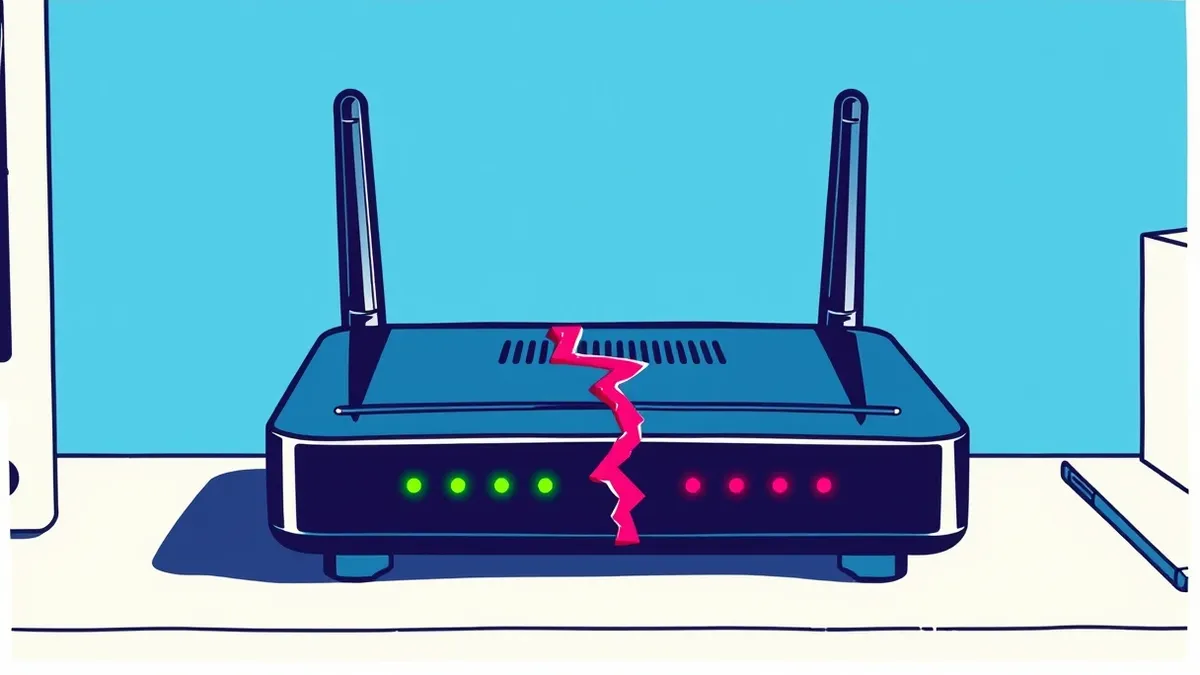
Totolink X2000R Stack Overflow in static_dns1 Parameter Allows Authenticated Code Execution
Authenticated HTTP requests targeting the static_dns1 parameter in Totolink X2000R firmware can trigger critical stack-based buffer overflows and arbitrary code execution.
Key points
- CVE-2026-42021 affects Totolink X2000R firmware version TOTOLINK-X2000R-Gh-V1.0.0-B20250421.1327.
- The National Vulnerability Database rates the flaw as Critical with a CVSS score of 9.1.
- Attackers must authenticate to the device before sending crafted HTTP requests to exploit the vulnerability.
The National Vulnerability Database published details for CVE-2026-42021, identifying multiple stack-based buffer overflow flaws in Totolink router firmware. These vulnerabilities reside in the boa formIpv6Setup static network configuration functionality of the Totolink X2000R device.
What happened
The affected component is the static_dns1 parameter within the boa formIpv6Setup static network configuration functionality of the Totolink X2000R. According to the National Vulnerability Database, the flaw exists in firmware version TOTOLINK-X2000R-Gh-V1.0.0-B20250421.1327. The vulnerability stems from improper handling of input data, classified under CWE-121.
An attacker sends a specially crafted HTTP request to trigger the stack-based buffer overflow. This action allows for arbitrary code execution on the device. The attacker must first obtain valid credentials to make an authenticated HTTP request. The National Vulnerability Database assigns a CVSS score of 9.1, rating the severity as Critical.
Why it matters
Network defenders must account for the authentication requirement when assessing exposure to CVE-2026-42021. While the flaw requires valid credentials, compromised admin accounts are common in IoT environments. Once an attacker gains access, the ability to execute arbitrary code via a crafted HTTP request poses a severe risk. The stack-based buffer overflow in the static_dns1 parameter provides a direct path to system control. This affects any network using the specified Totolink X2000R firmware version. The Critical rating indicates the high potential for impact if exploited.
What to watch
- Monitor for unauthorized changes to static DNS settings in router configurations.
- Look for unusual outbound traffic from the router to unknown external IPs.
- Check admin login logs for successful authentications followed by rapid configuration changes.
- Verify that firmware versions match known secure releases if updates become available.
Signals worth monitoring
Security teams usually detect this activity by reviewing web server logs for malformed HTTP requests. Look for POST requests to the IPv6 setup endpoints that contain unusually long parameter values. Check for crashes or reboots in the router logs immediately after configuration changes. Monitor for unexpected process spawns or network connections from the device. Verify that all admin sessions originate from expected IP addresses. Review firewall logs for traffic that deviates from standard DNS resolution patterns. Ensure that intrusion detection systems are tuned to alert on buffer overflow signatures.
Background: CVSS score
CVSS provides a standardized vector for exploit difficulty and access requirements, not business value. A high score indicates an easy attack path, not necessarily significant damage. You must contextualize the score with your environment’s exposure, asset value, and compensating controls to determine true risk.
Read the full guide: CVSS Scores: Why High Numbers Mislead Your Risk Assessment
What to do and how to stay safe: Totolink
- Audit all Totolink X2000R devices to confirm if they run firmware version TOTOLINK-X2000R-Gh-V1.0.0-B20250421.1327.
- Enforce strong, unique passwords for router admin accounts to mitigate the authentication requirement.
- Restrict administrative access to the router interface to trusted internal networks only.
- Monitor network traffic for anomalies that may indicate active exploitation or lateral movement.
General security guidance from the Firewall Chronicle newsroom. It is not confirmed advice from the organisations named in this story.
Frequently asked questions
What is the CVSS score for CVE-2026-42021?
The National Vulnerability Database rates the vulnerability as Critical with a CVSS score of 9.1.
Does an attacker need to authenticate to exploit this flaw?
Yes, the source material states that an attacker must make an authenticated HTTP request to trigger the vulnerabilities.
Which Totolink firmware version is affected by this buffer overflow?
The vulnerability affects Totolink X2000R firmware version TOTOLINK-X2000R-Gh-V1.0.0-B20250421.1327.